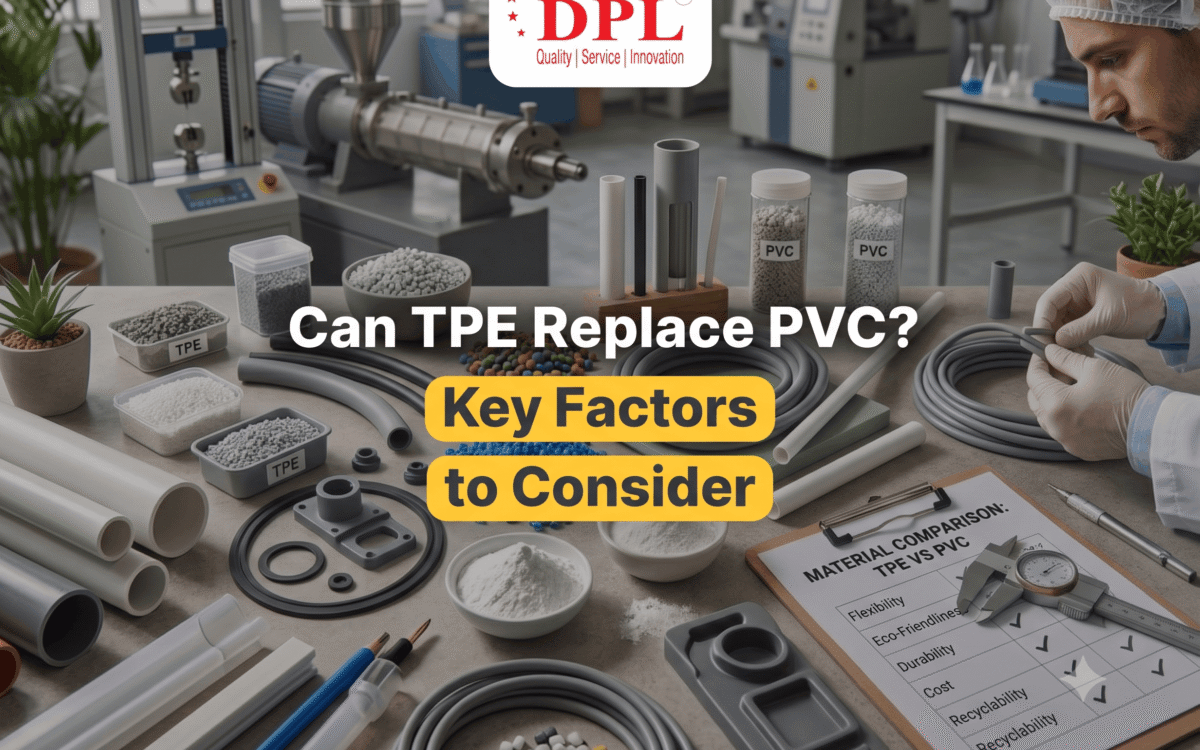
For decades, Polyvinyl Chloride (PVC) has been the undisputed heavyweight champion of the plastics industry. Walk through any medical facility, automotive plant, construction site, or consumer goods warehouse, and you will find flexible PVC everywhere from IV drip lines and blood bags to car door seals and footwear soles.
However, manufacturing requirements and global regulations are changing fast. With growing regulatory crackdowns on toxic plasticizers, mounting consumer demand for eco-friendly goods, and tighter performance requirements, engineers are actively seeking modern alternatives.
This brings us to one of the most frequently asked questions in modern polymer engineering: can tpe-s replace pvc?
The short answer is yes—especially in flexible, high-performance applications. But switching raw materials is never as simple as pressing a button on your molding machine. Here is a comprehensive look at how Thermoplastic Elastomers (specifically styrenic block copolymers, or TPE-S) stack up against traditional PVC, and what manufacturers need to evaluate before making the transition.
Understanding the Contenders: PVC vs. TPE-S
To determine whether a replacement makes sense, we first have to understand the fundamental chemistry of both materials.
Traditional PVC is inherently a rigid, brittle polymer. To make it flexible enough for hoses, gaskets, or shoe soles, compounders must add liquid plasticizers (typically phthalates) in large quantities. While effective, these plasticizers are not chemically bonded to the polymer chain, meaning they can leach out over time.
TPE-S (often based on SEBS or SBS chemistry), on the other hand, is an intrinsically elastomeric material. It possesses rubber-like elasticity derived from its molecular structure rather than external chemical softening agents. When asking can tpe-s replace pvc, the underlying driver is usually this: TPE-S delivers the soft, pliable feel of plasticized PVC without the structural and health risks associated with migrating plasticizers.
4 Critical Factors When Transitioning from PVC to TPE
If you are considering swapping out flexible PVC for TPE in your product lineup, here are the key technical and operational factors you must weigh:
1. Regulatory Compliance and Toxicity
One of the primary catalysts driving manufacturers away from PVC is regulatory scrutiny. Global frameworks like REACH and RoHS have placed strict limits on phthalate plasticizers due to potential health and endocrine-disrupting concerns.
TPE-S compounds are inherently phthalate-free, halogen-free, and odorless. For medical devices, infant toys, food-contact packaging, and automotive interior skins, TPE-S offers immediate compliance advantages without requiring continuous reformulation to dodge changing chemical bans.
2. Low-Temperature Flexibility and Weatherability
Flexible PVC has a notable operational drawback: it becomes stiff, brittle, and prone to cracking in sub-zero temperatures as the plasticizers lose mobility.
TPE-S maintains exceptional elasticity across a significantly wider temperature range—often performing reliably from -50°C up to +125°C. Furthermore, high-grade TPE-S formulations provide superior resistance to UV radiation and ozone degradation, making them far more durable for outdoor automotive weatherstripping and architectural gaskets.
3. Processing Efficiency and Recyclability
From a factory floor perspective, processing economics play a massive role.
- Scrap Recovery: Thermoset rubbers cannot be re-melted, and recycling flexible PVC can be challenging due to chlorine content and plasticizer degradation. TPE-S is 100% thermoplastic, meaning runner scraps and off-spec parts can be reground and reintroduced directly into the production hopper.
- Cycle Times: TPE-S typically solidifies faster in the mold than flexible PVC, allowing injection molders to shorten cycle times and increase machine throughput per shift.
- Machine Wear: PVC processing generates small amounts of corrosive hydrochloric acid gas if slightly overheated, requiring specialized corrosion-resistant barrel screws. TPE-S processes cleanly without corroding equipment.
4. Raw Material Cost vs. Total Cost of Ownership
On a pure price-per-kilogram basis on an invoice, flexible PVC often appears cheaper than high-grade TPE compounds. However, looking only at resin cost is misleading.
Because TPE-S generally has a lower specific gravity (density) than PVC (roughly 0.9 to 1.1 g/cm³ compared to PVC’s 1.2 to 1.4 g/cm³), you get significantly more molded parts per kilogram of raw material. When you combine this volumetric yield advantage with faster cycle times and near-zero scrap waste, the total cost per finished part frequently favors TPE.
The Sourcing Advantage: Partnering with DPL Group
Successful material conversion requires more than just picking a compound off a shelf. You need custom compounding to match the exact Shore hardness, melt flow index, and tensile strength your parts require.
This is why forward-thinking manufacturers turn to the leading tpe compound manufacturers in india. Among them, DPL Group has established itself as an innovative frontrunner in advanced polymer solutions.
Through their specialized DPOBLEND product family, DPL Group engineers advanced TPE compounds designed specifically to replace conventional PVC in demanding automotive, footwear, and consumer goods applications. DPOBLEND formulations provide:
- Unrivaled batch-to-batch consistency that prevents injection molding defects.
- Non-toxic, phthalate-free, and odorless material profiles.
- Superior bonding compatibility with rigid engineering plastics like PP, ABS, and PC for multi-shot overmolding.
- Tailored compression set resistance and flex-fatigue life.
By working alongside DPL Group’s technical team, manufacturers receive dedicated processing guidance, ensuring that the transition from PVC to TPE is seamless, cost-effective, and fully optimized for existing machinery.
Making the Switch
While rigid PVC will continue to hold a strong position in construction piping due to its low cost and structural rigidity, the verdict for flexible applications is clear: TPE-S is rapidly superseding flexible PVC across modern manufacturing.
By upgrading to a cleaner, recyclable, and higher-performing elastomer from trusted compounders like DPL Group, your business can elevate product performance, satisfy tightening global standards, and future-proof its production lines.